
Juice basics
Cold-Pressed vs Regular Juice: What Actually Changes?
By the Tiff. Wellness Co. editorial team · Published
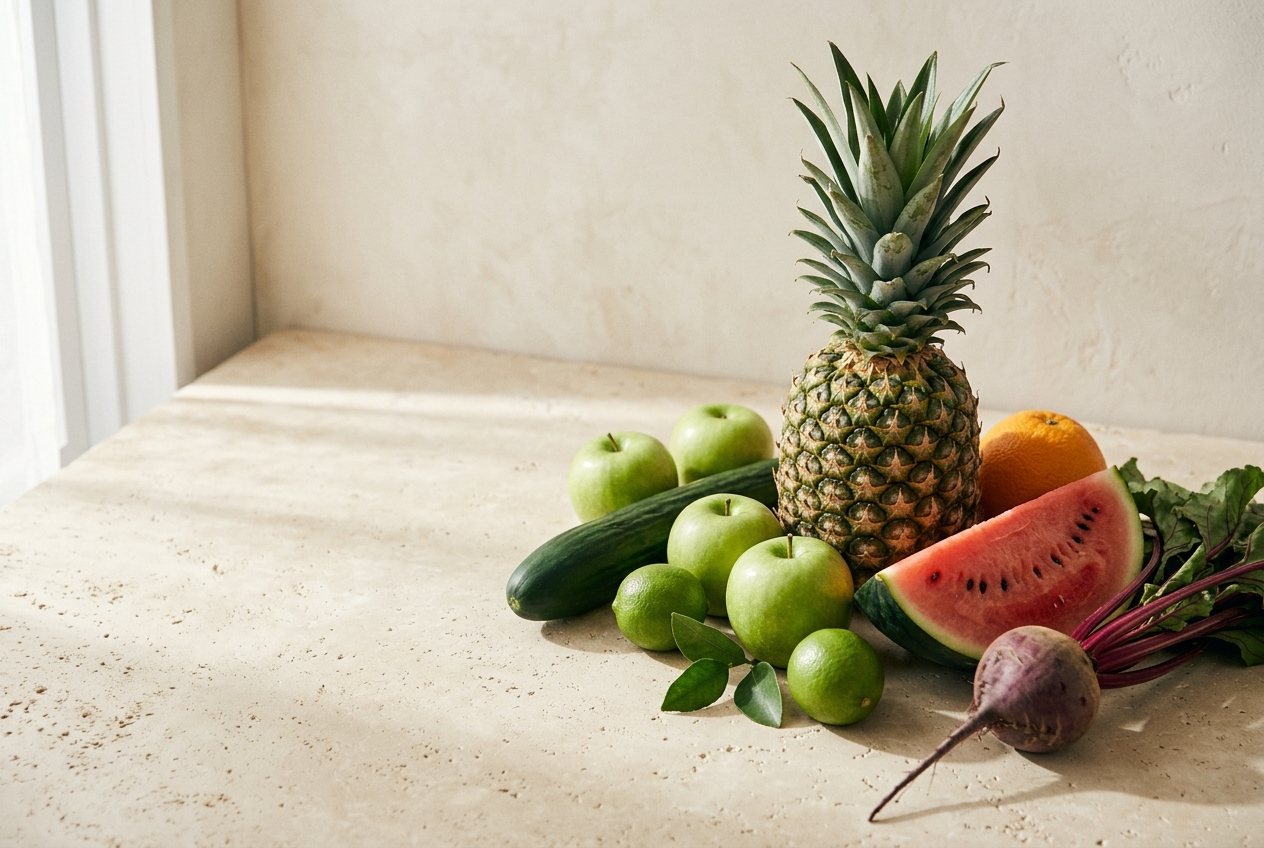
Cold-pressed juice is extracted by pressing produce without added heat, and it's often sold raw and refrigerated with a short life. "Regular" juice usually means centrifugal-juiced or concentrate-based products that are pasteurized for long shelf life. The reliable differences are process, texture, freshness window and price — not a blanket nutrition victory for either side.
Two different questions: extraction and treatment
Most "cold-pressed vs regular" confusion comes from mixing two separate steps. Extraction is how juice leaves the produce: a hydraulic press (cold-pressed), a fast-spinning centrifugal juicer, or industrial concentrate processing. Treatment is what happens next: nothing (raw), high-pressure processing (HPP), or heat pasteurization. A juice can be cold-pressed and pasteurized, or centrifugal and raw — the two labels don't travel together automatically.
When a grocery bottle lasts months unrefrigerated, that tells you about treatment, not extraction. When a local bottle says "drink within days of pressing," that's a raw, refrigerated product. The FDA's juice safety guidance is written around exactly this distinction: untreated juice is more perishable and deserves more care.
What you'll notice in the glass
| Trait | Cold-pressed, raw | Pasteurized / concentrate |
|---|---|---|
| Texture | Denser, may separate — shake first | Uniform, thinner |
| Taste | Closer to cut produce; varies batch to batch | Consistent, sometimes cooked-fruit notes |
| Shelf life | Days, refrigerated (follow the bottle) | Weeks to months |
| Where sold | Local producers, fridges, pickup/delivery | Any shelf or fridge, anywhere |
| Price | Higher per ounce | Lower per ounce |
Separation is normal in raw juice — it's produce solids settling, not spoilage. Off smell, fizzing or bloated caps are the actual warning signs; the storage guide covers what to watch for after pickup.
The claims to ignore
Skip any pitch that says cold-pressed juice universally "preserves all the enzymes" or delivers guaranteed health outcomes. Processing effects differ by nutrient and product, and no juice is a medicine. The honest sell for cold-pressed is simpler: it tastes closer to fresh produce, it's made near you recently, and you can read exactly what went in. That's what we offer — Tropical Recovery, for instance, is pineapple, green apple, mango and lime with clear protein, pressed for your pickup rather than a warehouse.
Price and freshness: the trade you're actually making
Put plainly, pasteurized shelf juice is cheap because time works for it — one production run serves months of sales. Cold-pressed raw juice is expensive because time works against it: more produce per bottle, refrigerated trucks and fridges at every step, and anything unsold inside the window is a loss the price must cover. Neither model is a scam; they're different bets on what you value. Our price comparison method turns that into per-ounce math you can run on any two bottles.
There's also a freshness-experience trade inside the raw category itself. A raw bottle on pickup day and the same bottle at the end of its window are noticeably different drinks — produce flavors fade before safety dates arrive. Pressed-to-order models like our pickup system compress that gap by making bottles for your collection date; display-case models stretch it. Ask when your bottle was pressed, whoever you buy from.
Which should you buy?
- Want maximum freshness and local sourcing, drink within days: cold-pressed raw, stored cold.
- Need bottles that keep for weeks in a pantry or office: pasteurized is the practical pick.
- Buying for someone in an at-risk group: FDA guidance favors treated juice.
- Comparing brands: read the label — ingredient order and additions matter more than the press.
Try the difference instead of debating it
The cheapest experiment is one bottle of each style in the same week. If the fresh-pressed texture and taste win for you, a small mixed pack is the next step; if not, you've saved money with no myth required. Our menu and the buying guide are here when you're comparing Dallas options.
Key takeaways
- Extraction (pressed vs centrifugal vs concentrate) and treatment (raw vs HPP vs pasteurized) are separate questions — ask both, every time.
- Raw refrigerated juice trades shelf life for fresher taste; pasteurized trades the reverse. Neither wins on nutrition by default.
- FDA guidance points at-risk groups (young children, pregnant people, older or immunocompromised adults) toward treated juice.
- Separation is common in raw juice, but appearance and smell can never establish safety — the maker's dates and instructions rule.
- One bottle of each style in the same week settles the debate for your palate cheaper than any article.
Frequently asked questions
Does cold-pressed juice have more nutrients?
Not as a blanket rule. Nutrient content depends on the produce, ripeness, time since pressing and storage — and processing differences vary by nutrient. We don't claim our bottles deliver specific nutrient amounts, because our menu doesn't publish nutrition panels yet. Judge each product by its own label.
Why does cold-pressed juice cost more?
More produce per bottle, slower extraction, refrigerated logistics and short sell-by windows all raise cost. Whether that's worth it depends on how much you value fresh taste and texture — the price comparison guide shows how to judge per ounce.
Is raw juice safe?
The FDA notes that untreated juice can pose higher risk for vulnerable groups (young children, older adults, pregnant people, weakened immune systems) and that treated juice is the safer option for them. Check whether a juice is raw, HPP or pasteurized, and follow the storage instructions on the bottle.
Sources
Editorial note: written and maintained by Tiff. Wellness Co. (the company) based on our posted menu and the cited public sources. We don't provide medical or nutrition advice, and we flag anything we haven't verified — including supplement doses our menu doesn't list.
Get Dallas pickup updates
New flavors, pickup locations and plain-language guides. No spam, unsubscribe anytime.
Related reading
Juice basics
Juice vs Smoothie: Texture, Ingredients and Choice
Juice vs smoothie, compared honestly: fiber and texture, ingredient visibility, portability, cost and prep — and how to pick the right one for the moment.
Juice basics
How to Store Cold-Pressed Juice After Pickup
How to store cold-pressed juice after pickup: the cold chain home, fridge placement, spoilage signs and why the bottle's own label beats any blanket rule.
Buying guides
How to Read a Juice Label Before You Buy
A one-minute method for reading juice labels: ingredient order, serving size math, added vs total sugar, and how functional additions should be disclosed.